House Rewire Brisbane Cost: Real 2026 Pricing Guide
A full house rewire is one of the biggest electrical jobs a Brisbane homeowner will ever pay for. It is also one of the most lied about. Some quotes come in at $6,000 and skip half the work. Others come in at $40,000 and pad every line item. This guide gives you the real 2026 numbers SEQ Sparky charges across Brisbane Southside, what is actually included in a proper house rewire, the signs your home needs one, and the Energex paperwork most homeowners never hear about until the bill arrives.
I am Anthony Nuich, owner of SEQ Sparky and a QLD licensed electrician (Licence 90899) with 20 years in the trade and 14 years contracting. Every rewire we do is owner operated, fully insured to $20 million, and finished with Form A and Form B compliance so the job is signed off cleanly with Energex and the Electrical Safety Office.

Brisbane house rewire cost in 2026 at a glance
Pricing for a full house rewire in Brisbane comes down to four things: house size, number of circuits, age of the existing wiring, and whether the mains and switchboard need replacing as well. Here are the real ballparks SEQ Sparky uses when pricing residential rewires in 2026.
| House size | Typical 2026 rewire cost | Indicative timeline |
|---|---|---|
| 1 bedroom unit or granny flat | $4,500 to $7,500 | 3 to 4 days |
| 2 bedroom home | $7,000 to $11,000 | 4 to 5 days |
| 3 bedroom standard home | $9,500 to $15,500 | 5 to 7 days |
| 4 bedroom modern home | $13,000 to $20,000 | 7 to 10 days |
| Large or two storey home | $17,000 to $26,000 | 10 to 12 days |
| Queenslander or heritage home | $19,000 to $34,000 | 10 to 15 days |
These prices assume a full rewire to current AS NZS 3000 wiring rules, a new main switchboard with RCBO protection on every circuit, interconnected smoke alarms, and a clean Energex sign off. Anything cheaper is almost always cutting corners. Anything significantly higher is usually padded or includes major plaster and joinery work that should be quoted by a builder separately.
What pushes a Brisbane rewire price up
- Hardwood floors and tongue and groove walls. Queenslanders, post war timber homes and old workers cottages in suburbs like Annerley, Greenslopes, Coorparoo and Tarragindi take longer to wire because cabling has to be fed through hardwood without splitting the timber or destroying the original finish.
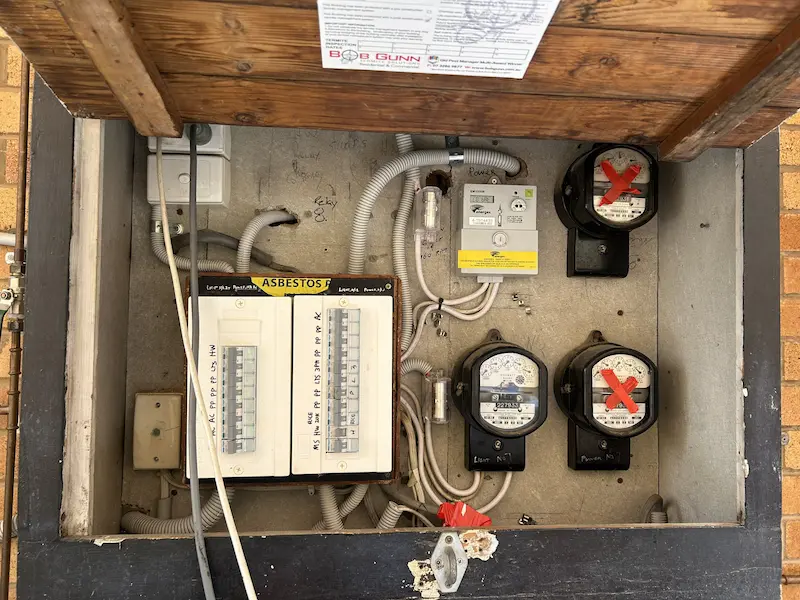
- Asbestos backing panels. Any switchboard installed before 1985 likely has an asbestos sheet behind it. Removal needs a licensed asbestos process and bumps the switchboard replacement up by $400 to $900.
- Three phase upgrades. If you are adding ducted air con, an EV charger, a pool pump and a home office, a three phase mains upgrade is often worth doing during the rewire. Add $3,500 to $6,500 for the Energex EWR, three phase mains and three phase board.
- Two storey access. Wiring a second storey without removing ceiling sheets requires more creativity, more time, and sometimes a small section of ceiling sheet sacrifice. Add 10 to 20 percent on labour.
- Lath and plaster walls. Heritage homes with original lath and plaster cannot have wires fished through cleanly. Expect plasterer patch up costs of $1,500 to $4,000 on top of the rewire.
7 signs your Brisbane home needs a rewire
A rewire is not always urgent. Sometimes a switchboard upgrade and a few new circuits is enough. But if your home is ticking three or more of these boxes, plan the rewire now rather than waiting for a fault to force the issue.
1. Your home was built before 1980
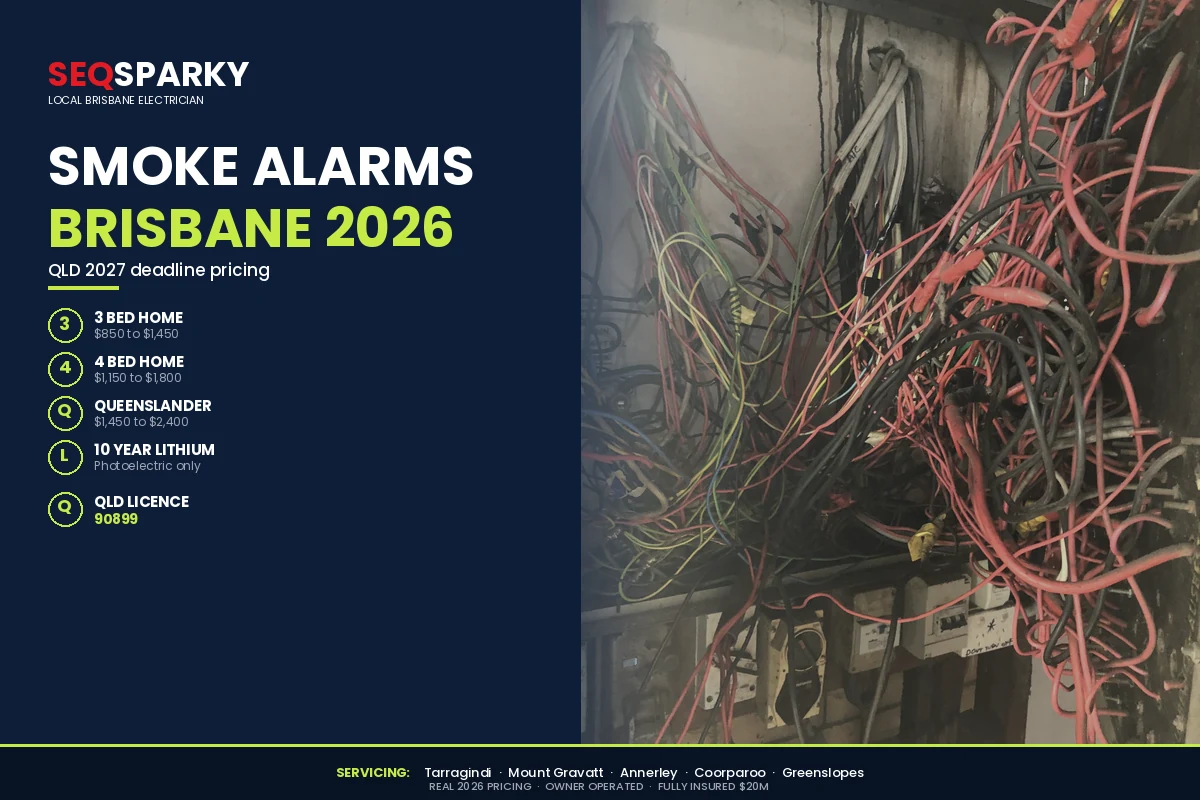
Pre 1980 Brisbane homes often have rubber insulated VIR cabling, cotton covered TPS, or early black PVC. These insulations dry out, crack, and fall off the copper when disturbed. Once the insulation breaks down, every light switch and power point is a potential short circuit or arc fault waiting for the right conditions.
2. Ceramic fuses or a rewireable fuseboard
If you still pull little porcelain fuses out of the switchboard when something trips, your protection is decades behind current standards. There are no safety switches, no individual circuit breakers, and the fuse wire itself can be replaced with any old piece of copper. We cover this in detail in our switchboard warning signs guide.
3. Burning smell from outlets or the switchboard
A burning bakelite smell is overheating insulation. It usually means a connection has loosened, a circuit is overloaded, or the wiring itself is breaking down. This is not a watch and wait situation. Turn the circuit off at the board and get a licensed electrician out the same day.
4. Lights dimming when the air con or microwave kicks on
Lights dimming is a voltage drop across overloaded cabling. The original copper was sized for a 1960s electrical load: a fridge, a stove, a few lights, maybe a black and white television. A modern Brisbane home runs a ducted air con, induction cooktop, two fridges, hot water booster, EV charger, pool pump and a home office. The old cable cannot keep up.
5. Two pin or unearthed power points
If any power point in your home still has only two pins, or the bottom earth pin is loose or missing, the appliance you plug in has no earth path. That is the path designed to trip the breaker before you do. Two pin outlets are an instant rewire trigger.
6. Frequent tripping you cannot explain
Random trips that come and go, especially after rain or in summer humidity, point to moisture tracking through cracked insulation. By the time it is tripping regularly, the safety switch is doing exactly what it was designed to do. Replacing the safety switch will not fix the underlying problem.
7. You bought a Queenslander or pre 2000 home
A pre purchase electrical inspection on an older home almost always recommends a rewire within five years. If you are renovating, doing it now while the walls are open saves 30 to 50 percent compared to rewiring an occupied finished home later. Our electrical compliance Brisbane guide walks through what triggers a compliance issue at sale time.
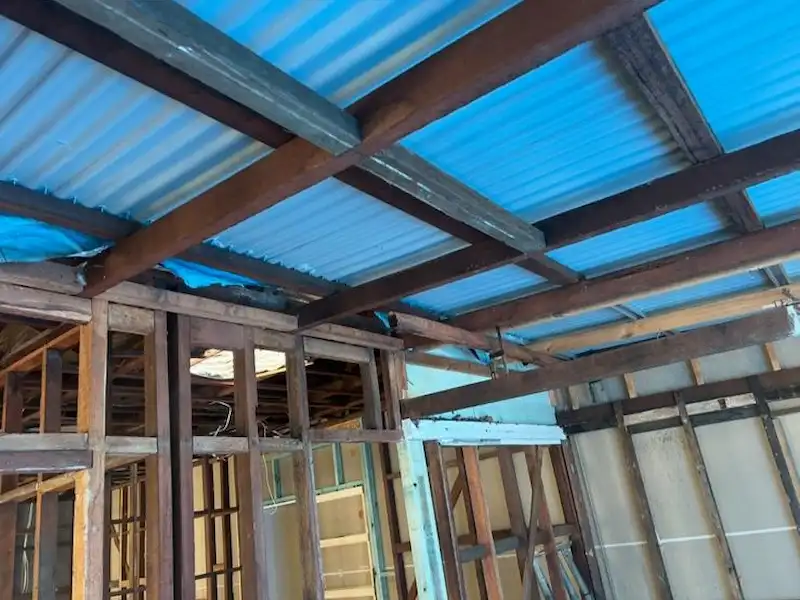
What is actually included in a SEQ Sparky house rewire
A real full rewire is more than swapping cable. Here is what goes into every job we quote on Brisbane Southside.
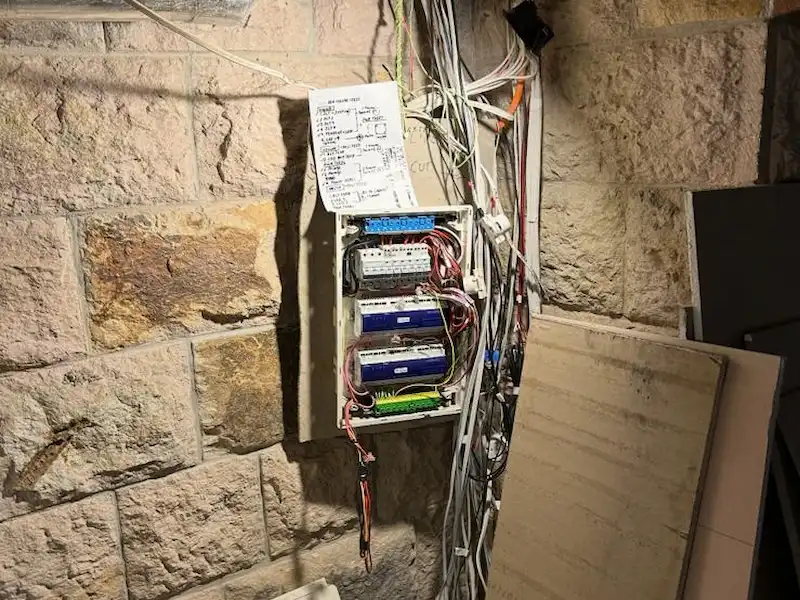
- Removal of all old circuit wiring back to the switchboard
- Run of new TPS double insulated cable through walls, ceilings and subfloor
- New main switchboard with individual RCBO protection on every circuit
- New GPOs throughout, plus additional outlets where the home is short
- New light points and switches, with allowance for LED downlights if requested
- Interconnected hard wired smoke alarms with 10 year battery backup to current QLD legislation
- Safety switch protection on every circuit, not just power and lights
- Upgraded earth electrode and main earthing system
- New mains lead from the consumer pole or pit to the switchboard if required
- Energex Electrical Work Request lodged for any mains, meter or service changes
- Certificate of Testing and Compliance (Form A) issued on completion
- Form B if work is required on the Energex side of the meter
- Full clean down and a walk through with the homeowner so you know what every breaker does
The Energex EWR process explained
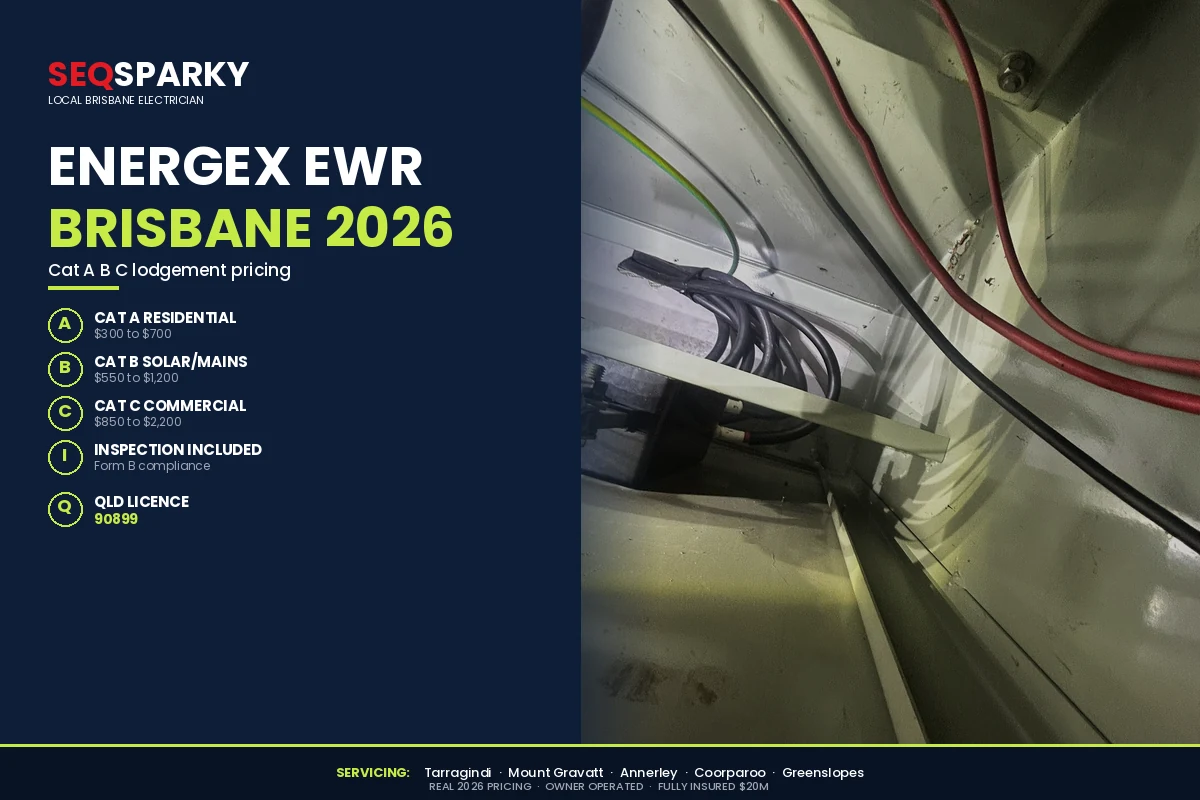
Most homeowners do not realise that a full rewire often triggers an Energex Electrical Work Request. This is the formal notification to Energex that work is happening on the supply side of the meter, that the connection point needs replacing, or that the meter itself needs to come out for switchboard access.
An EWR is not a tax. It is the legal requirement under the Electricity Industry Code that protects you from rogue connections and gives Energex the information they need to update their records. A typical residential EWR adds $300 to $700 to the job depending on whether a meter relocation or service mains upgrade is needed. SEQ Sparky handles the lodgement, the paperwork and the inspection so you do not chase Energex.
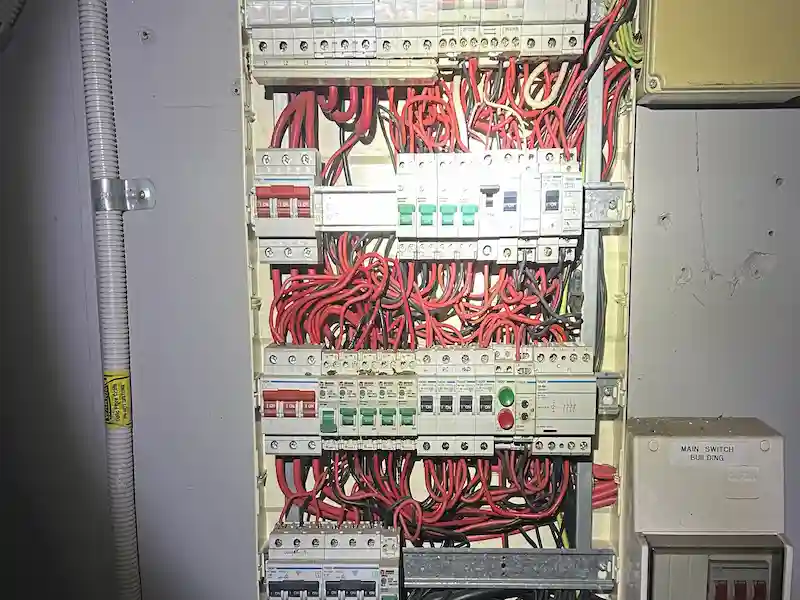
Can you do a partial rewire instead
Yes. We rewire homes in stages all the time, especially for owner occupiers who cannot vacate for a week. The most common phased approach is:
- Stage 1: switchboard and mains. Replace the board, mains lead and earthing first. This stops the most common failure points immediately and costs $3,500 to $6,500. Full pricing in our switchboard upgrade cost 2026 guide.
- Stage 2: kitchen, laundry and wet areas. These circuits carry the most current and have the highest moisture exposure. Rewire these first if budget is tight. Typical cost: $3,000 to $6,000.
- Stage 3: bedrooms, lounge and lights. The lowest risk circuits get finished last when funds allow. Typical cost: $3,000 to $8,000 depending on home size.
Phased rewires cost about 15 to 25 percent more in total than a single contract, but they spread cash flow and let you live in the home throughout.
Should you upgrade to three phase during the rewire
If you are adding ducted air conditioning, an EV charger, a pool, a workshop or solar with battery storage, three phase is worth pricing now. The cost gap between single and three phase during a rewire is much smaller than retrofitting later. Full pricing and decision criteria are in our three phase power Brisbane 2026 guide.
How long does a Brisbane rewire take
Timelines depend on house size, access and whether you are living in the home during the work. As a rule of thumb:
- 3 bedroom standard home: 5 to 7 working days
- 4 bedroom modern home: 7 to 10 working days
- Queenslander: 10 to 15 working days
- Add 2 to 3 days if you are occupying the home during work
- Add 3 to 5 days if a plasterer or painter needs to follow behind
Power is off in sections, not for the full duration. We sequence the work so the fridge and one power outlet stay live as long as possible. For more detail on similar timelines see our switchboard upgrade timeline guide.
How to choose the right electrician for a rewire
A rewire is one of the few electrical jobs where the cheapest quote is almost always the most expensive choice over the next ten years. Things to check before you sign:
- QLD electrical contractor licence number, not just an electrician licence
- Public liability insurance certificate (we hold $20 million)
- Written scope listing every circuit, GPO, light point and switch included
- Energex EWR included in the price, not added as a surprise
- Form A (Certificate of Testing and Compliance) included as standard
- Owner operator presence on site, not just a sub contracted crew
- Recent reviews from Brisbane homeowners, not just generic ratings
If you want to see how we approach quotes, the residential electrician Brisbane page walks through the process in plain English.
Frequently asked questions
How much does it cost to rewire a 3 bedroom house in Brisbane in 2026?
A standard 3 bedroom Brisbane home costs $9,500 to $15,500 for a full rewire in 2026. That price includes a new switchboard with RCBOs, all new circuits, GPOs, light points, interconnected smoke alarms, the Energex EWR and a Form A compliance certificate. Older homes with hardwood floors or asbestos backing panels sit at the upper end.
How much does it cost to rewire a Queenslander?
A full Queenslander rewire in 2026 ranges from $19,000 to $34,000 depending on size, original lath and plaster condition, and whether the existing hardwood floors need to be lifted. Most heritage Brisbane homes also benefit from upgrading to three phase at the same time, which adds $3,500 to $6,500 to the total.
Do I need to move out during a house rewire?
Not always. We rewire occupied Brisbane homes regularly by sequencing the work so the fridge, one power outlet and the bathroom stay live as long as possible. For a full 3 bedroom rewire you will be without power in different rooms for 5 to 7 working days. Families with young kids, medical equipment or shift workers often choose to move out for the heaviest 3 days to keep things simple.
How long does a Brisbane house rewire take?
A 3 bedroom home takes 5 to 7 working days. A 4 bedroom home takes 7 to 10 working days. A Queenslander or large two storey home takes 10 to 15 working days. Add 2 to 3 days if you are living in the home during the work and 3 to 5 days if a plasterer or painter needs to follow behind.
What is an Energex EWR and do I have to pay for one?
An Energex Electrical Work Request is the formal notification to Energex that work is happening on the supply side of your meter. It is required by law under the Electricity Industry Code. A typical residential EWR costs $300 to $700 depending on whether a meter relocation or service mains upgrade is needed. SEQ Sparky lodges the EWR and handles the inspection so you do not need to deal with Energex directly.
Can I do a partial rewire instead of a full one?
Yes. The most common phased approach is switchboard and mains first, then kitchen and wet areas, then bedrooms and lights. Phased rewires cost about 15 to 25 percent more in total but let you spread cash flow and stay in the home. We will quote both options so you can choose.
What is the difference between a rewire and a switchboard upgrade?
A switchboard upgrade replaces only the main protection panel and adds safety switches. It costs $2,500 to $5,500 and is finished in a day. A full rewire replaces all the cabling, GPOs, light points and the switchboard. It costs $9,500 to $34,000 and takes 5 to 15 days. If your wiring is sound but the board is old, an upgrade is enough. If the wiring itself is degraded, you need a rewire.
Do you provide a compliance certificate?
Yes. Every SEQ Sparky rewire is finished with a Certificate of Testing and Compliance (Form A) and a Form B where Energex side work is required. These documents are your proof to insurers, future buyers and the Electrical Safety Office that the work meets AS NZS 3000 wiring rules and current QLD legislation.
Get a real fixed price for your Brisbane rewire
If your home is ticking the warning sign boxes, the smart move is a proper site assessment before you commit to a number. I will come out personally, look at the existing switchboard, check the cable type behind a couple of GPOs, count circuits, and write a fixed price scope that includes the Energex EWR and Form A compliance. No subcontractors, no surprise variations, no guesswork.
Call SEQ Sparky on 0431 110 148 or request a quote through the home rewiring Brisbane service page. Brisbane Southside, owner operated, QLD Licence 90899, fully insured to $20 million.